How NEWater Purifies Used Water Into Ultra-Clean Supply
Three-step treatment combining microfiltration, reverse osmosis and UV disinfection produces water exceeding WHO standards, now supplying roughly 40% of current demand.
Full article
Documenting how one of the world's most water-scarce nations built a resilient supply through NEWater recycling, desalination, and large-scale rainwater collection across a 728 km² island.
In-depth analysis of the systems, facilities and research behind Singapore's water security strategy.
Three-step treatment combining microfiltration, reverse osmosis and UV disinfection produces water exceeding WHO standards, now supplying roughly 40% of current demand.
Full article
Four desalination facilities, including the dual-mode Keppel Marina East plant, process 160 million gallons per day from the surrounding strait.
Full article
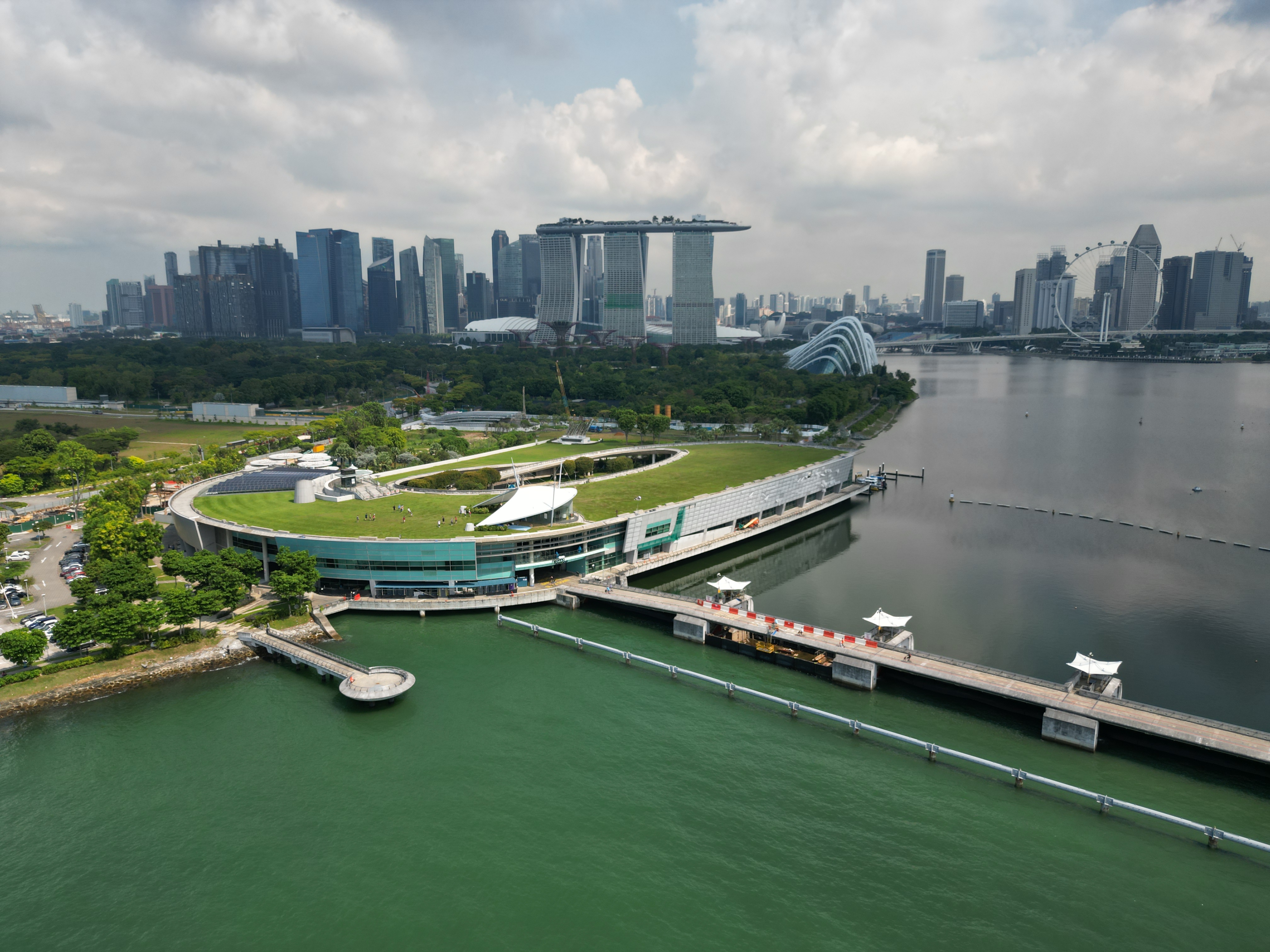
The 10,000-hectare Marina catchment and 17 reservoirs channel rainfall into a freshwater supply, covering two-thirds of the island's land area.
Full article
Singapore's water security rests on four diversified sources: local catchment water, imported water from Johor, NEWater (advanced reclaimed water), and desalinated seawater. This deliberate diversification protects against climate variability and supply disruption.
NEWater and desalination are weather-resilient sources that function regardless of rainfall, an increasingly important factor as climate change brings longer dry spells and more intense but less predictable storms to the equatorial region.
By 2060, PUB aims for NEWater and desalination to supply up to 85% of Singapore's water needs, reducing dependence on imported water whose agreement expires in 2061.
Source: PUB Singapore
The Singapore Membrane Consortium (SG MEM) coordinates research across NTU's Membrane Technology Centre, NUS's Membrane Science and Technology Consortium, and multiple polytechnic labs. Current work spans biomimetic membranes, low-energy desalination pilots and 3D-printed membrane spacers.
This institutional ecosystem positions Singapore as one of the densest research clusters for water treatment membrane technology, with direct pipeline to industrial application through PUB's procurement framework.
Source: SG MEM Consortium